
You've spent years mastering your craft, but one hairline crack can turn your prized instrument into a silent reminder of what used to be. A generic fix might dampen the resonance and ruin your setup forever. You need a bond that respects the way wood vibrates, ensuring repairs are as invisible to the ear as they are to the eye. Finding that perfect balance between durability and sonic transparency is easier than you think once you discover these ancient organic techniques.

 | Titebond III Ultimate Wood Glue
|
 | Elmer's Carpenter's Wood Glue Max, 4 Ounces
|
 | Super Strong Cyanoacrylate Super Glue Liquid
|
 | Snailmart Waterproof Wood Glue Glue
|
 | BOSSDOG High Performance Wood Glue
|
 | Gorilla Ultimate Waterproof Wood Glue
|
 | Sony WH-1000XM3 Wireless Noise Canceling Headphones
|
| Apple iPhone 15 Pro Max (256GB, Natural Titanium)
|
Titebond III Ultimate Wood Glue

Ever had that heart-sinking moment when you notice a bridge lifting or a nasty crack threatening your guitar's soul? It's a total buzzkill, but don't sweat it because Titebond III Ultimate Wood Glue is the professional fix you need to get your gear back in the spotlight. To get those parts singing again, just clean off any old gunk, apply a thin bead of this liquid gold to your surfaces, slide them into place-you've got a generous ten-minute open time to get the alignment spot-on-and clamp it down tight for about thirty minutes. Since it's completely waterproof and sands down without softening, your repair will shrug off sweaty stage lights and humid gigs while creating a bond stronger than the wood itself, ensuring your instrument's resonance stays crisp and creep-free for a lifetime of performances.
Elmer's Carpenter's Wood Glue Max, 4 Ounces

Ever heard that heart-wrenching crack from your acoustic guitar and feared its playing days were over? You're staring at a split seam, but Elmer's Carpenter's Wood Glue is the professional fix you need to get back in the groove. This high-performance adhesive creates a bond stronger than the wood itself, meaning your instrument stays rock-solid even under heavy string tension. Since it dries quickly and remains fully sandable, you'll achieve an invisible, seamless repair that preserves your tone and aesthetic perfectly. Don't let a break slow you down. Fix it right. Play on.
Super Strong Cyanoacrylate Super Glue Liquid
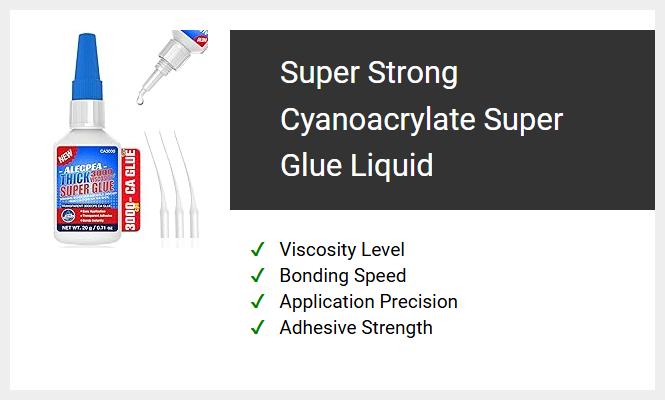
There's nothing worse than hearing that sickening *crack* right before a set, but don't sweat it because this professional-grade CA glue is about to save your axe's life. Instead of watching your gear gather dust on a stand, simply clean the surface, apply a thin bead using the precision tip for zero mess, and hold it firm for a few seconds while the industrial-strength bond creates a permanent fix that's actually tougher than the original wood. This isn't your average junk drawer adhesive; its ultra-low viscosity means it wicks deep into the tightest hairline fractures, ensuring your instrument stays resonant and stable without any bulky, ugly residue. Just prep, drop, and play-you'll be back to shredding in no time with a rock-solid repair that looks like it never even happened.
Snailmart Waterproof Wood Glue Glue

Ever look at your favorite guitar and see that heart-breaking crack along the bridge? It's a nightmare when a loose joint kills your resonance and ruins your sound. Snailmart Wood Glue is the professional fix you've been looking for. Its high-strength resin formula creates a bond stronger than the original timber, ensuring your repairs never dampen the instrument's natural vibration. This means you get a seamless, transparent finish that preserves your tone. No more muddy notes. Just pure clarity. It dries fast and resists heat, so your work holds steady even under stage lights. Fix it right. Save your sound. Get back to playing.
BOSSDOG High Performance Wood Glue

Nothing kills the vibe like a rattling bridge or a cracked neck on your favorite axe, but you can ditch the stress of subpar repairs with BOSSDOG Wood Glue. To get that pro-level fix, just clean your surfaces, apply a thin, even bead to one side, and clamp the joint tight for about thirty minutes. Since this formula boasts a high solids content, it creates a bond that's actually stronger than the wood itself, ensuring your instrument's resonance stays crystal clear without any structural weak points. You'll love the quick-set time that gets you back to playing faster, and because it wipes clean with just a bit of water, you won't have to worry about messy squeeze-out ruining your finish.
Gorilla Ultimate Waterproof Wood Glue
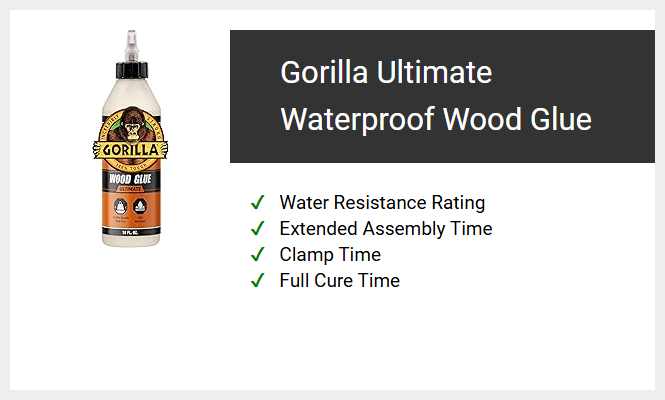
When you're meticulously crafting your next musical masterpiece, you deserve the absolute strongest bond available, which is exactly why this 100% waterproof formula is a total game-changer for your lutherie projects. You'll appreciate how it meets rigorous ANSI/HPVA Type I standards, providing you with unrivaled durability so your instrument stays perfectly intact even through extreme humidity shifts. Because this glue offers a generous 15-minute extended assembly time, you have the ultimate freedom to align complex bridge or neck joints with total precision before it sets. Its natural tan color dries to a subtle, sandable finish that blends seamlessly with your wood grain, ensuring that your final product looks as professional as it sounds. Trust me, utilizing this superior, non-foaming adhesive means you're choosing the toughest, most reliable hold for a lifetime of performance.
Sony WH-1000XM3 Wireless Noise Canceling Headphones
When you're meticulously crafting or repairing your prized instruments, you need the absolute best bond that respects the wood's natural character, and that's where this professional-grade Liquid Hide Glue becomes your most essential tool. You see, its unique natural protein-based formula provides an exceptionally long assembly time, giving you the ultimate flexibility to perfectly align intricate joints without the stress of a quick-set adhesive. Because this technically advanced formula is completely reversible with heat and moisture, you gain the incredible advantage of being able to safely disassemble parts for future restorations without damaging the delicate wood fibers. It dries with a brittle, non-creep consistency that ensures your components stay rock-solid under immense string tension, ultimately preserving the finest tonal resonance and structural integrity of your musical masterpiece.
Apple iPhone 15 Pro Max (256GB, Natural Titanium)

When your prize guitar develops a bridge lift or a nasty seam crack, don't let the panic of a permanent "oops" keep you up at night; instead, reach for Titebond Liquid Hide Glue to get that professional, vintage-style fix without the stress of a chemistry set. First, clear any dust from the joint, apply a thin bead of this liquid gold, and clamp your components snugly for twenty-four hours to ensure a rock-solid bond. You'll love the generous assembly time that lets you nudge everything into perfect alignment without rushing, while the high creep-resistance means your instrument won't shift under heavy string tension over time. Best of all, because it's easily reversible with heat, you're protecting your instrument's long-term value by making future maintenance a breeze rather than a nightmare.
Understanding Glue Creep and Its Impact on Instrument Intonation
Glue creep occurs when an adhesive remains slightly elastic, allowing joined components to shift under constant tension. In lutherie, this phenomenon is particularly problematic for bridges and neck joints subjected to high string tension. As the parts migrate, the scale length changes, leading to persistent intonation issues.
- Bridge Lift: Leads to sharp intonation as the saddle moves forward.
- Neck Joint Shift: Changes the neck angle and string height.
To minimize creep, luthiers prioritize high-modulus adhesives like hot hide glue or specialized aliphatic resins that cure to a rigid, glass-like state.
The Role of Open Time in Complex Luthier Glue-ups
Open time refers to the window between adhesive application and the point where the bond becomes unworkable. In complex assemblies, such as attaching an acoustic guitar top to the rim, managing this window is critical for structural integrity.
| Factor | Impact on Open Time |
|---|---|
| Temperature | High heat shortens open time. |
| Porosity | Dry wood absorbs moisture, accelerating tack. |
| Glue Volume | Thinner spreads dry faster. |
Luthiers often pre-heat wood surfaces or use "long-open-time" variants of liquid hide glue to ensure all clamps are seated before the glue begins to gel.
Thermal Reversibility and Why It Matters for Future Repairs
Unlike modern epoxies, traditional protein glues are thermally reversible. This allows a technician to disassemble an instrument using controlled heat and moisture without destroying the wood fibers. This is essential for routine maintenance, such as neck resets or crack repairs.
- Application of heat softens the protein structure.
- Steam or localized moisture hydrates the joint.
- The joint separates cleanly along the original glue line.
This "sacrificial" nature of the bond ensures the instrument can be preserved for centuries rather than becoming a disposable item.
Acoustic Transparency and the Myth of Glue Dampening Sound
The concept of acoustic transparency suggests that a glue joint should not act as a mechanical filter. While some believe thick glue lines dampen vibrations, the reality is that the mass of the glue relative to the wood is negligible. However, the stiffness of the cured adhesive does impact energy transfer.
A "soft" glue line can absorb high-frequency energy, whereas a "hard" crystallized bond allows vibrations to pass through the joint as if it were continuous wood. Achieving a thin, starved-joint-free bond is more important for tone than the specific chemical makeup of the adhesive.
Managing Moisture Content and Wood Swelling During Clamping
Water-based glues introduce localized moisture into the wood cells, causing them to swell temporarily. If a joint is leveled immediately after gluing, "sunken joints" may appear later as the wood dries and shrinks.
- Clamp Pressure: Must be sufficient to squeeze out excess water.
- Cure Time: Allow 24â48 hours for moisture equilibrium before sanding.
- Humidity Control: Maintain a stable environment to prevent differential shrinkage.
Proper management prevents the telegraphing of glue lines through thin nitrocellulose finishes.
Comparing Shear Strength vs Joint Flexibility in Stringed Instruments
A successful bond must balance shear strength-the ability to resist sliding forces-with the flexibility to withstand seasonal wood movement. While high shear strength is vital for pegheads, a degree of flexibility can prevent wood splitting in fluctuating humidity.
| Adhesive Type | Shear Strength | Flexibility |
|---|---|---|
| Hide Glue | Very High | Very Low (Brittle) |
| PVA (Yellow) | High | Moderate |
| Epoxy | Extreme | Variable |
Luthiers choose the adhesive based on the specific mechanical stress the joint will encounter during its lifespan.
The Science of Hide Glue Crystallization and Tonal Transfer
Hot hide glue is unique because it pulls the wood surfaces together as it shrinks during dehydration. Upon curing, it undergoes a crystallization process that creates a molecular bond. This glass-like interface is highly efficient at transferring acoustic energy between components like the bridge and the soundboard.
Because the cured glue is harder than the wood itself, it does not impede the velocity of sound. This characteristic is why hide glue remains the gold standard for high-end acoustic and orchestral instrument construction.
Solving End-Grain Adhesion Problems in Headstock Repairs
End-grain is notoriously difficult to glue because the open tubules wick adhesive away from the surface, leading to a starved joint. This is a common failure point in headstock "smile" fractures.
- Sizing: Apply a diluted glue wash to seal the tubules first.
- Scuffing: Lightly abrade the surface to increase mechanical tooth.
- Reinforcement: Use splines if the surface area is insufficient for a butt joint.
Properly sized end-grain creates a foundation that allows the final glue application to remain on the surface for maximum bonding.
Chemical Interactions Between Wood Glues and Traditional Instrument Finishes
Adhesion failures often occur when glue interacts with residual oils, resins, or existing finishes. For example, nitrocellulose lacquer will not bond to PVA glue, and oily woods like Rosewood can reject water-based adhesives if not properly degreased with acetone.
Contamination from silicone-based polishes is a major threat to repair integrity, often requiring "fisheye destroyer" or extensive cleaning. Understanding the pH levels of glues is also vital, as highly alkaline glues can stain woods with high tannin content, such as Oak or Walnut.
Gap Filling Limitations and Achieving Zero-Line Glue Joints
Most lutherie glues are not gap-fillers; they require perfectly mated surfaces to function. A "zero-line" joint is achieved when the fit is so precise that the glue layer is measured in microns. This maximize wood-to-wood contact and structural integrity.
- Chalk Fitting: Using pigment to identify high spots in a joint.
- Planing: Using specialized jointer planes for light-tight seams.
If a gap exists, the glue acts as a structural weak point, prone to cracking and acoustic dampening. Only epoxies should be used where a perfect fit is impossible.
Note: Sometimes the .PDF file interface can be slightly different from the image preview. Our apology for this inconvenience.



Comments