
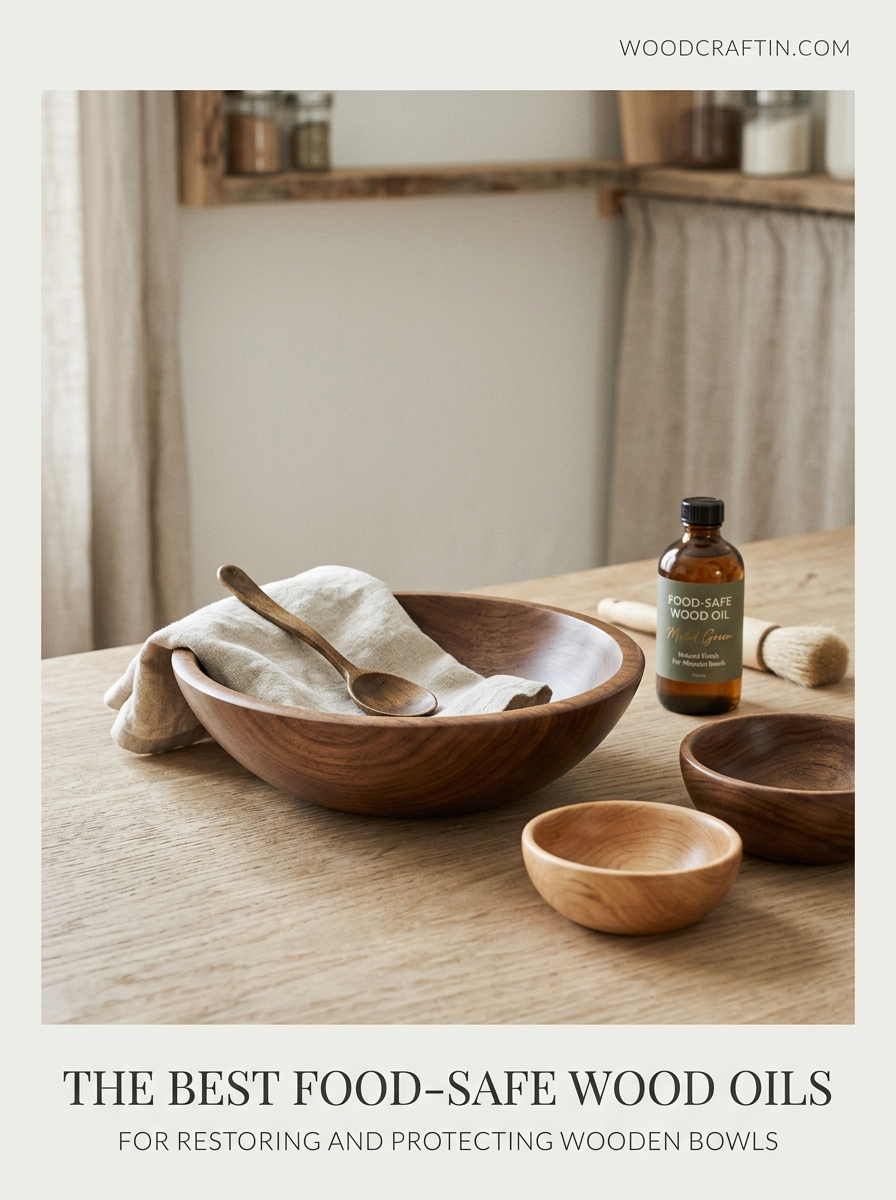
You've spent good money on those beautiful wooden bowls, but lately, they're looking dull, parched, and a little bit gross. If you don't treat them right, those tiny cracks will become a breeding ground for bacteria while the wood eventually splits. You deserve a kitchen that looks great, and the right wood oil is the secret to keeping your bowls glowing, hydrated, and completely food-safe for years to come.
Choosing Food Safe Wood Oils Based on Viscosity and Penetration Depth
Selecting the right oil depends on the wood's density and pore structure. Low-viscosity oils, such as pure tung oil or thin fractions of mineral oil, penetrate deeply into the cellular structure, providing internal protection. High-viscosity oils remain near the surface, creating a thicker barrier but potentially leaving a tacky residue if not wiped properly.
- Low Viscosity: Ideal for dense hardwoods like maple or cherry.
- High Viscosity: Suitable for porous woods like oak or walnut.
Deep penetration is vital for utility items like salad bowls, as it ensures the finish does not simply wash away during cleaning.
Molecular Stability and Preventing Rancidity in Natural Finishing Oils
Not all natural oils are suitable for wood finishing. Vegetable oils like olive, corn, or flaxseed (culinary grade) contain long-chain fatty acids that do not polymerize. Instead, they oxidize and undergo a chemical breakdown, resulting in a foul odor and bacterial growth known as rancidity.
| Oil Type | Stability | Food Safe? |
|---|---|---|
| Mineral Oil | High | Yes |
| Raw Linseed | Low | No (Rancid) |
| Pure Tung Oil | High | Yes |
To ensure food safety, only use highly stable mineral oils or specific drying oils that undergo a complete chemical transformation.
Understanding the Polymerization Process of Drying vs Non-Drying Oils
Drying oils, such as tung or boiled linseed oil, react with oxygen to form a solid, plastic-like film through polymerization. Non-drying oils, primarily mineral oil, remain in a liquid state within the wood fibers indefinitely.
- Induction: Oxygen is absorbed into the oil.
- Polymerization: Molecules link to create long chains.
- Solidification: The liquid transforms into a hard, protective resin.
Non-drying oils require frequent reapplication as they leach out, whereas polymerized oils provide a permanent, water-resistant seal.
Managing Moisture Content and Fiber Saturation to Prevent Bowl Cracking
Wood is hygroscopic, meaning it absorbs and releases moisture based on the environment. When internal moisture drops below the Fiber Saturation Point (FSP), the wood begins to shrink, often leading to radial cracks or checking.
Saturating the wood with oil replaces lost moisture with a stable medium that does not evaporate. This "bulks" the cells, maintaining the dimensional stability of the bowl. Proper oiling acts as a buffer, slowing the rate of moisture exchange and preventing the rapid stress changes that cause structural failure.
The Science of Cross-Linking in Saliva-Resistant Wood Finishes
For items like spoons or baby rattles, the finish must withstand enzymes in saliva. Cross-linking occurs during the curing of drying oils, where chemical bonds form between polymer chains. This creates a dense, three-dimensional network that is insoluble and resistant to mechanical wear and chemical breakdown.
Finishes that achieve high cross-link density are less likely to soften or leach when exposed to moisture and heat, making them the gold standard for high-contact food implements.
Evaluating Curing Times and Solvent Evaporation in Enclosed Bowl Shapes
Deep bowls and vessels present a challenge for curing due to restricted airflow. Drying oils require oxygen to cure; in enclosed shapes, solvent vapors can linger, displacing oxygen and stalling the polymerization process.
- Airflow: Use fans to circulate air into the bowl cavity.
- Thin Coats: Prevent "puddling" at the bottom of the bowl.
- Solvent Flash-off: Ensure all carriers have evaporated before applying subsequent layers.
Failure to manage these factors leads to a "sour" smell and a finish that remains soft or gummy for weeks.
How to Identify and Neutralize Tannin Bleed When Oiling Exotic Woods
Exotic woods like ebony, rosewood, or oak contain high concentrations of tannic acid. When oil is applied, these tannins can migrate to the surface, causing dark spotting or interfering with the oil's drying chemistry.
To manage this, woodworkers often use a "spit coat" of shellac or a specific tannin-blocker before oiling. Identifying tannin-rich wood involves checking for reactive darkening when the wood is dampened. Neutralizing the surface pH or using a fast-curing oil can trap tannins within the grain, preventing bleed-through into the final finish.
Mechanical Bonding vs Surface Film Formation in Bowl Maintenance
Oil finishes generally protect wood through two mechanisms: penetration (mechanical bonding) and film formation. Mechanical bonding occurs when the oil seeps into the tracheids and vessels, hardening "inside" the wood. Film formation occurs when excess oil builds up on the exterior.
For kitchenware, a mechanical bond is preferred. Film-forming finishes (like polyurethane) can chip or flake into food. A penetrating oil finish wears down gracefully and can be easily refreshed by sanding and reapplying a light coat of oil.
Restoring Structural Integrity to Dehydrated Wood Fibers with Oil Saturation
Old, dry wooden bowls often become brittle as the natural resins and moisture dissipate. Deep saturation with a non-drying mineral oil can "resurrect" these fibers. The oil acts as a lubricant between the cellulose chains, restoring flexibility and preventing the wood from shattering upon impact.
The process involves submerging the item or applying multiple heavy coats until the wood can no longer absorb liquid. This saturation adds weight and a "thud" sound to the wood, indicating the air pockets have been filled with stable oil.
Thermal Conductivity and Heat Resistance of Cured Bowl Finishes
Wooden bowls used for hot soups or pastas must withstand thermal shock. Cured drying oils have low thermal conductivity, meaning they do not transfer heat as quickly as plastics or metals, protecting the user's hands. However, excessive heat can soften a finish that is not fully cross-linked.
Pure tung oil is notably heat-resistant once fully cured, sustaining temperatures that would melt wax-based finishes. When selecting a finish for hot food service, prioritize high-heat polymerization oils over simple wax/oil blends.
Note: Sometimes the .PDF file interface can be slightly different from the image preview. Our apology for this inconvenience.

Comments